
Get into Dartmouth
Dartmouth's ~6% acceptance rate reflects fierce competition for the smallest Ivy, a close-knit community where professors know your name, the wilderness is your backyard, and traditions run deep. Understanding how to show you'll thrive in this unique environment makes all the difference.
75%
75% of Cosmic’s applicants are admitted into Dartmouth versus only 6.0% nationally.
What Makes Dartmouth Unlike Any Other University
Dartmouth combines Ivy League academics with a tight-knit community, unparalleled flexibility, and an outdoor culture that shapes everything about life on College Hill.
The D-Plan: Design Your Own Path
Dartmouth's unique quarter system features four 10-week terms per year. You choose which terms to be on campus and which to take off, opening doors for internships during non-summer months (when you're not competing with every other college student), extended study abroad, or research opportunities. Over 50% of students study abroad at least once.
"With the D-Plan, no two students have the same Dartmouth experience. This creates the opportunity to form a truly unique college journey."
— Dartmouth Student
First-Year Trips: Your Introduction to Dartmouth
Before classes even begin, 90%+ of incoming students spend five days in the New Hampshire wilderness on student-led outdoor adventures. Hike, canoe, farm, or just bond at a cabin, it doesn't matter your skill level. Trips end at the Moosilauke Ravine Lodge with no Wi-Fi, no cell service, and family-style meals. It's your first lesson: at Dartmouth, you can be yourself.
"It's the kind of experience people talk about long after graduation. At Dartmouth, it is normal to be silly and take risks."
— Dartmouth Student
The Dartmouth Outing Club
Founded in 1909, the DOC is the oldest and largest collegiate outing club in America. About 25% of undergraduates are members. The Appalachian Trail runs through campus. You can ski on Dartmouth's own mountain, hike to $5 cabins in the woods, or kayak on the Connecticut River. Outdoor culture isn't an extracurricular here, it's the culture.
"If you love the outdoors, Dartmouth is the place for you. There are countless ways to stay active and enjoy New Hampshire."
— Dartmouth Student
Traditions That Define the Experience
The Homecoming bonfire (since 1888) where freshmen run laps around a towering blaze. Winter Carnival, the "Mardi Gras of the North,” with ice sculptures, polar plunges, and human sled dog races. Green Key in spring. Sophomore Summer. These aren't just events; they're what makes Dartmouth, Dartmouth.
"Maybe it seems silly that we make a huge fire, but when everyone participates, it actually carries a lot of value."
— Dartmouth Student
Small, Close-Knit, Undergraduate-Focused
Dartmouth is the smallest Ivy (~4,500 undergrads). Classes are taught by professors, not graduate students. 90% of students live on campus. The 7:1 student-faculty ratio means professors know your name, attend your performances, and invite you to dinner. This isn't a research university where undergrads get lost, it's a community.
"The people at Dartmouth are some of the most outgoing, friendly, motivated, helpful, and caring people I have ever met."
— Dartmouth Student
Hanover: "What a College Should Look Like"
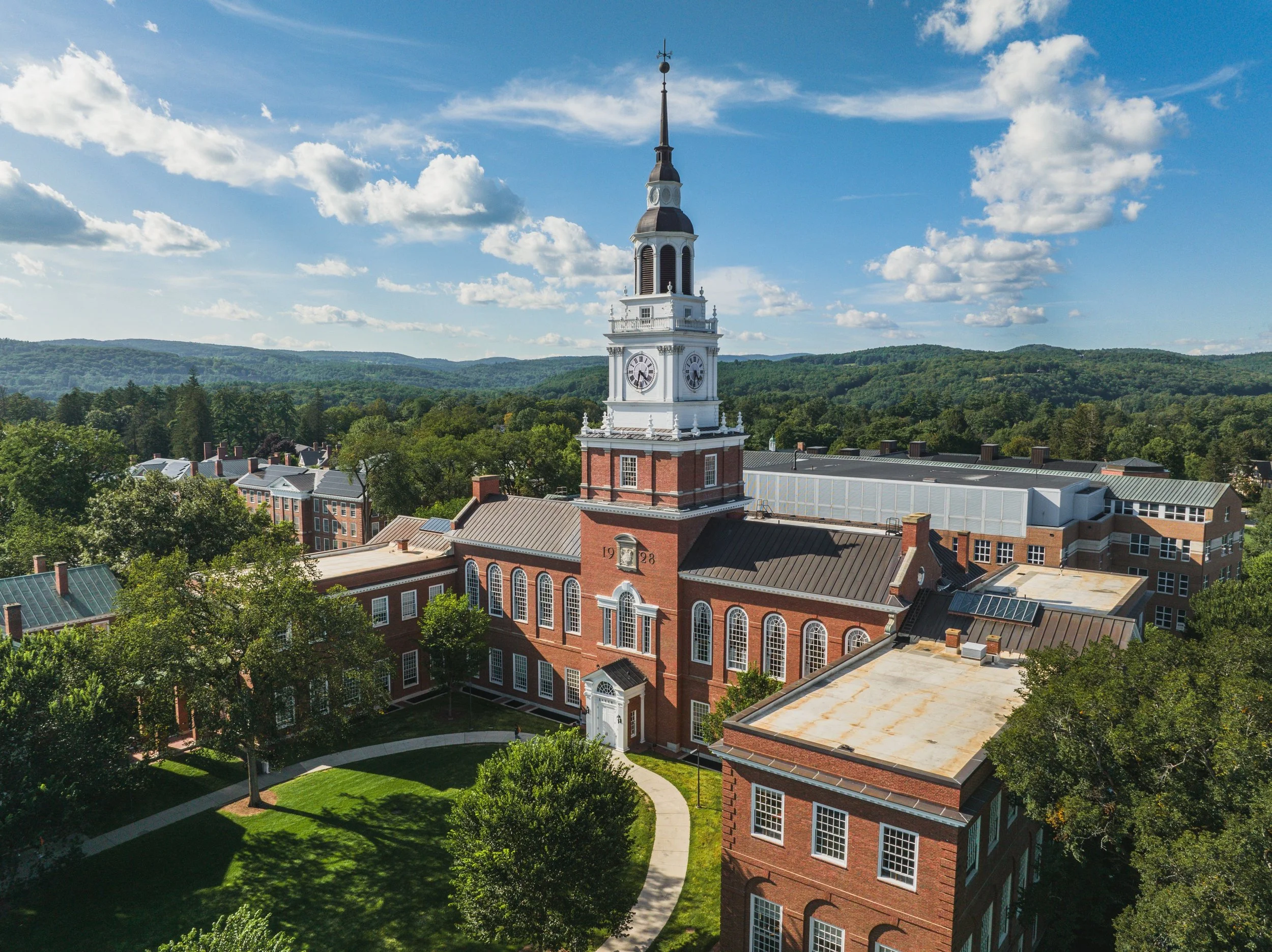
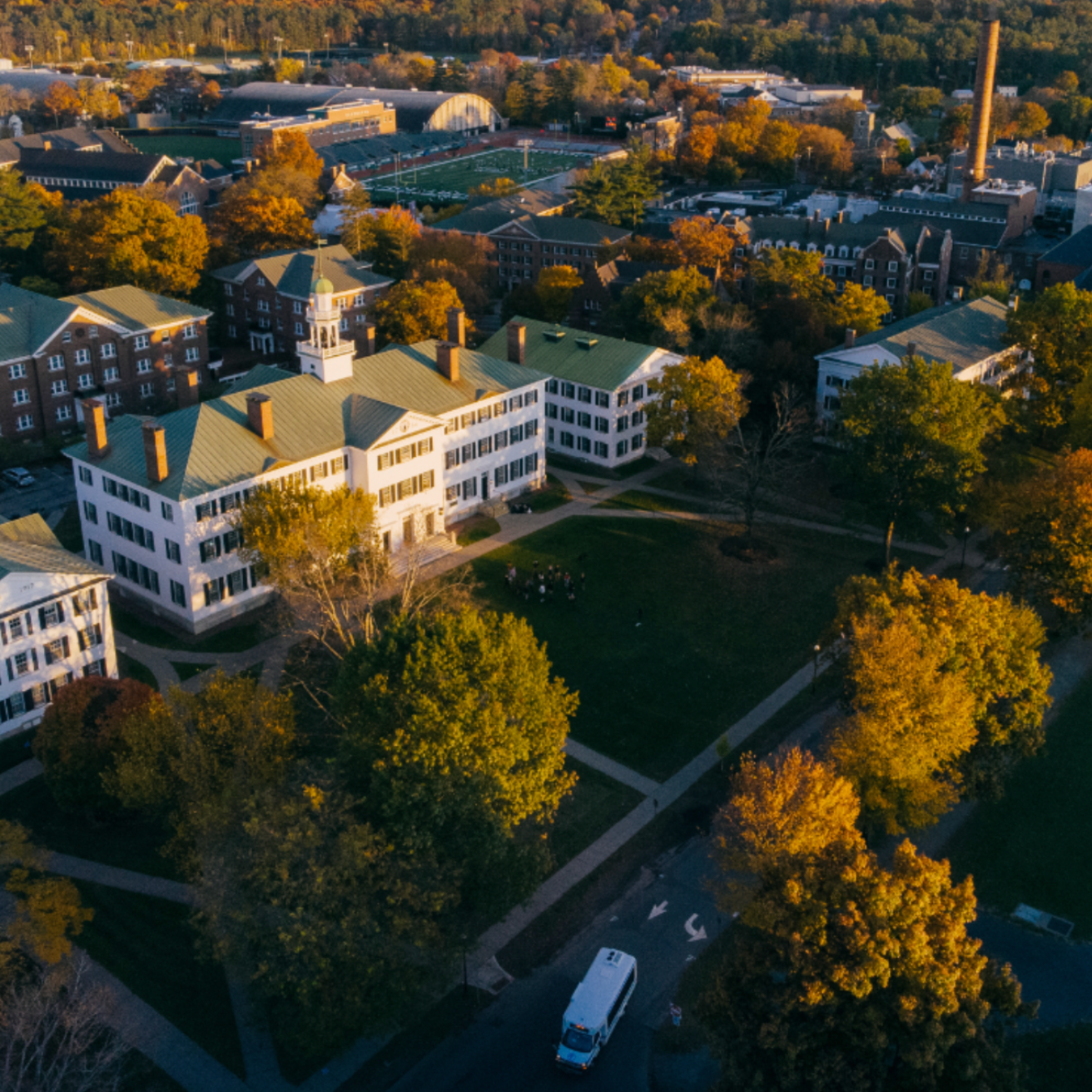
President Eisenhower visited in 1953 and said, "This is what a college should look like." The 269-acre campus sits in a quintessential New England college town, brick buildings, the Green, scenic beauty in every season. Yes, winters are cold. But Dartmouth students embrace it: that's what Winter Carnival is for.
"Dartmouth's seeming isolation has forced us to create a unique culture that can't be found anywhere else."
— Dartmouth Student
What Dartmouth Actually Looks for in Applicants
Dartmouth's supplemental essays, with their range of creative prompts, reveal exactly what they value: authentic, curious, passionate people who will contribute to community.
Dartmouth gives you choices. One required "Why Dartmouth" essay, then you pick one prompt from a set of two, and another from a set of seven. This flexibility is intentional, they want to see you, not a formula.
Here's what they're really asking:
-
The required essay asks why Dartmouth is a good fit. Write a hypothetical scenario showing yourself engaging with specific opportunities—name professors you'd work with, research centers you'd join, classes you'd take. Connect each engagement to your experiences, interests, and values. They want to see you've done your homework and have a singular objective.
Required Essay: "What aspects of Dartmouth's academic program, community, and/or campus environment attract your interest? How is Dartmouth a good fit for you?"
-
Both prompts in Set 2 test the same thing: can you articulate what makes you distinctively you? Don't tell your whole life story—open with a vivid, seminal experience that shaped your perspective. Show how that perspective evolved and how it will allow you to contribute to Dartmouth's intellectual diversity. The goal is demonstrating you'll enrich the community.
Set 2 Options: "Let your life speak" (environment/upbringing) OR "Be yourself. Everyone else is taken." (introduce yourself)
-
If you choose "What excites you?"—focus on an academic subject, creative act, or positive impact on others. Write vividly, first-person, showing what it feels like when you're fully engaged. Make the reader feel your excitement. Convince them the world needs you to study this at Dartmouth. Connect it to your lived experiences and show how pursuing it will make an impact.
Set 3 Option: "What excites you?"
-
The Dolores Huerta prompt asks about impact—and "impact" means tangibly improving real human lives, not increasing shareholder value. Open with a vivid experience that motivates you, or show yourself already making a difference. Even small actions count: explaining a concept to someone, helping with homework, raising awareness. Conclude with how you'll use your Dartmouth education.
Set 3 Option: "In what ways do you hope to make—or are you already making—an impact? Why? How?"
-
The Jane Goodall prompt tests whether you'll thrive in an intellectually diverse community. Describe a disagreement—ideally with a peer, since that's who you'll be debating in college. Show both parties learning something, even if minds didn't change. Give a specific, tangible lesson you gained. Conclude with how it impacted your goals or recontextualized your experiences.
Set 3 Option: "Tell us about a moment when you engaged in a difficult conversation or encountered someone with a different opinion."
-
This prompt invites you to geek out about a single topic. Use technical language if it helps you make a deeper point, but make sure the reader feels your enthusiasm. Include the lived experiences that shaped your curiosity and moments when engaging with this subject made you feel alive. Balance passion with awareness of the broader world—connect fascination to real people and problems.
Set 3 Option: "Celebrate your nerdy side."
-
The Kermit prompt asks how difference has shaped your identity. Show how difference generates new ideas, sparks intellectual conversations, broadens horizons. Reflect on how being around diverse people fostered your growth. If being different has been challenging, show how you overcame those challenges and how your difference helped you become more fully who you are.
Set 3 Option: "How has difference been a part of your life, and how have you embraced it?"
-
The Mindy Kaling Theater Lab prompt invites you to share a story of failure—but choose this only if you experienced an unusual or significant struggle with substantial stakes. Don't write about failing a test. Begin with how you failed or how you envisioned success before everything unraveled. The most important part: how you turned things around. Take responsibility. Show how failure became indispensable to your growth.
Set 3 Option: "Share a story of failure, trial runs, revamping, reworking, or journeying from bad to good."
How We Build Dartmouth-Ready Applicants
Dartmouth wants students who are authentically curious, engaged with their communities, and ready to embrace a close-knit, tradition-rich environment. Here's how we build that applicant.
8th Grade
Discovering Authentic Passions
Dartmouth's essays reward students who can articulate what genuinely excites them. We help students explore interests with depth, academic subjects, creative pursuits, community impact, and start building the experiences that will become compelling essay material.
9th Grade
Building Academic Excellence
Dartmouth values rigorous coursework taught by professors who know students personally. We help students select challenging courses while developing genuine intellectual curiosity, the foundation of a "celebrate your nerdy side" essay that feels authentic, not forced.
10th Grade
Developing Community Engagement
Dartmouth explicitly asks about making impact on others and contributing to community. We help students find meaningful ways to engage, tutoring, mentoring, organizing, creating, that demonstrate the character and personal qualities Dartmouth rates as "very important."
11th Grade
Deepening Expertise and Research
Junior year is when we connect students' interests to Dartmouth's specific offerings. Our PhD-level consultants help students pursue meaningful research and identify specific professors, programs, and opportunities they'll reference in essays. We help students articulate how the D-Plan fits their goals.
12th Grade
Application Excellence
Dartmouth's essay structure offers choices, and strategic selection matters. We craft a "Why Dartmouth" that demonstrates genuine research, help you choose the prompts that best showcase your authentic self, and ensure each essay works together to present a compelling, distinctive applicant.
Senior Year Start
It's Not Too Late
Starting at the beginning of senior year? We can still make a significant impact. Dartmouth's creative prompts test specific qualities, intellectual passion, community contribution, engagement with difference, resilience, that we can help you demonstrate through strategic presentation of your existing experiences.
Ready to Start Your Dartmouth Journey?
96% of Cosmic applicants are admitted to a Top-3 Choice school.
